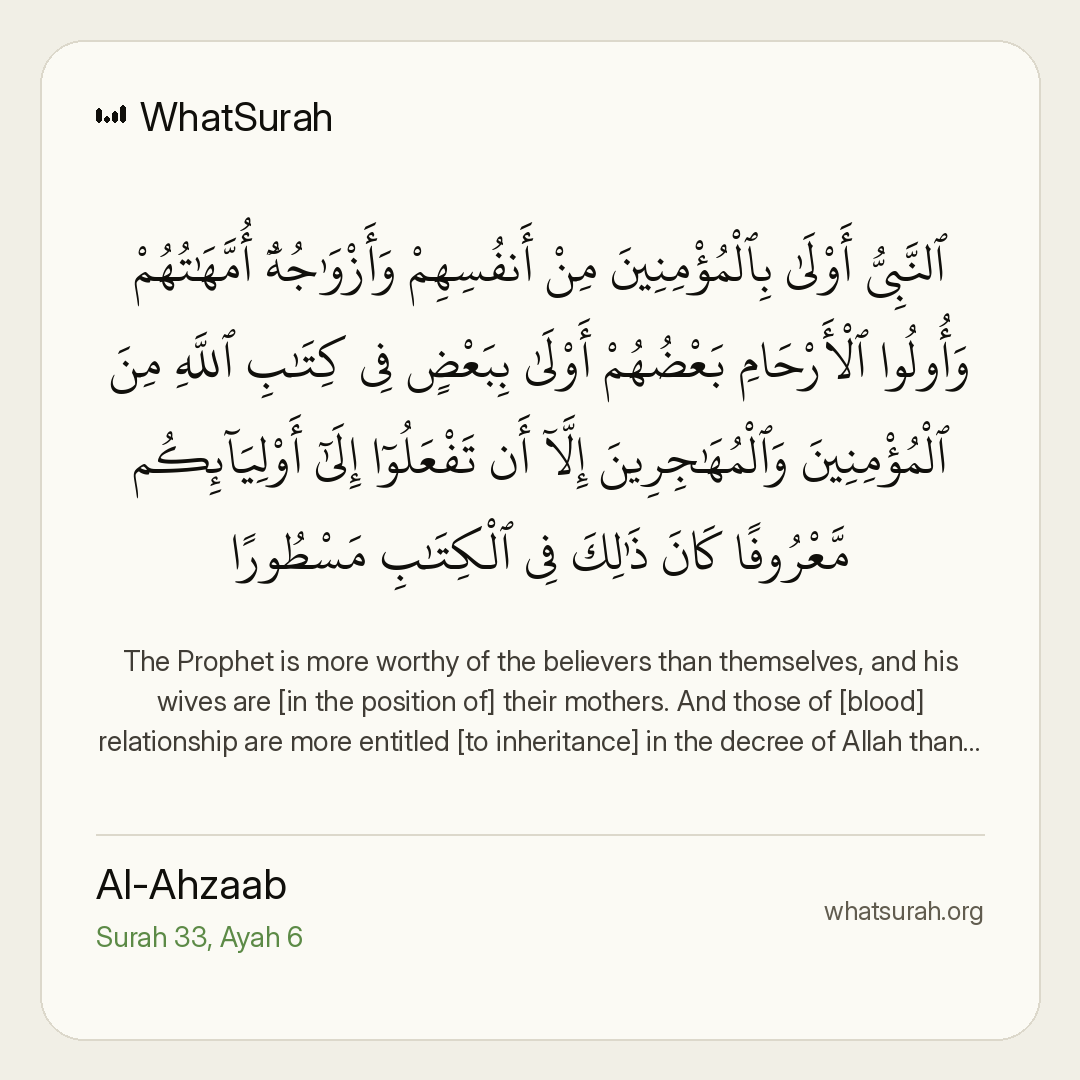
ٱلنَّبِيُّ أَوۡلَىٰ بِٱلۡمُؤۡمِنِينَ مِنۡ أَنفُسِهِمۡۖ وَأَزۡوَٰجُهُۥٓ أُمَّهَٰتُهُمۡۗ وَأُوْلُواْ ٱلۡأَرۡحَامِ بَعۡضُهُمۡ أَوۡلَىٰ بِبَعۡضٖ فِي كِتَٰبِ ٱللَّهِ مِنَ ٱلۡمُؤۡمِنِينَ وَٱلۡمُهَٰجِرِينَ إِلَّآ أَن تَفۡعَلُوٓاْ إِلَىٰٓ أَوۡلِيَآئِكُم مَّعۡرُوفٗاۚ كَانَ ذَٰلِكَ فِي ٱلۡكِتَٰبِ مَسۡطُورٗا ٦
An-nabiyyu awlaa bil mu'mineena min anfusihim wa azwaajuhoo ummahaatuhum. Wa ulul arhaami ba'duhum awlaa biba'din fee kitaabillaahi minal mu'mineena wal muhaajireena illaa an taf'aloo ilaa awliyaa'ikum ma'roofaa. Kaana dhaalika fil kitaabi mastooraa
The Prophet is more worthy of the believers than themselves, and his wives are [in the position of] their mothers. And those of [blood] relationship are more entitled [to inheritance] in the decree of Allah than the [other] believers and the emigrants, except that you may do to your close associates a kindness [through bequest]. That was in the Book inscribed.